PAT stands for Portable Appliances Testing, however it is commonly said PAT testing. Portable appliances are all of the devices which can be plugged in power source and are moveable. Examples in your household and daily routines are the microwave, hair dryer, coffee machine, and from your work space are computers, printers, even the computer mouse. After waking up, one of the first steps is to take your phone from the charger, but leaving it plugged in. This is a simple routine but poses a high potential electrical hazard, as if the charger is not properly maintained, it can lead to a fire. Testing those appliances is crucial for the safety of their user.
What Does a PAT Test Involve?
The three phases of PAT testing should be followed, according to the Health & Safety Executive (HSE).
As part of the induction, all users of electrical equipment should get some basic instructions on how to operate the equipment. Additionally, they must recognize warning indicators.
The equipment should undergo a thorough visual check before the manual PAT test. This procedure often identifies 90% of issues. During the visual examination, you should examine:
- the plug for any evidence of damage, visually and physically inspect the cable.
- look for any evident damage, such as cracks, burns, corrosion, and wear and tear on the casing of the appliance.
- look for any symptoms of overheating or fractures in the main socket.
- look out for cable-related trip hazards as well as overloading extension leads.
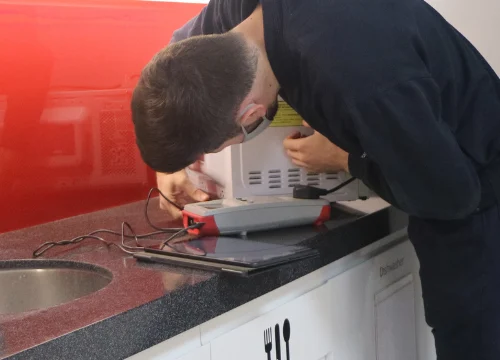
The third step involves a manual inspection using a portable appliance tester or PAT test. Only a qualified individual with the necessary tools and training should perform this. For the safest outcomes, it is highly advised to use a trained and experienced PAT tester. After that, the appliance will get a pass or fail sticker, and the duty holder should note the outcomes for future use.
Benefits of Regular PAT Testing
Regular PAT testing has several advantages, the most important of which is the notable decrease in electrical mishaps and fire risks. This successfully protects people and equipment in residences and commercial buildings. Complete PAT testing gives businesses and households alike peace of mind and confidence in the operation of their electrical equipment. This is achieved by ensuring dependability and safety.
Furthermore, electrical testing is a preventative procedure that makes it possible to identify possible problems earlier. In the long run, this proactive strategy results in cost savings and increased operating efficiency in addition to guaranteeing the equipment’s longevity.

How Often Should You Get PAT Testing?
Although there aren’t any laws specifically regulating PAT testing in the UK, there are a number of recommendations that specify requirements. Evaluating equipment that is subject to wear and tear and frequently used typically requires more frequent testing. This includes power tools and industrial machinery.
For low-risk equipment, such as office or kitchen appliances, less frequent testing could be required. However, regular inspections are still necessary to guarantee its safety. Professional PAT testers can guarantee regulatory compliance, reduce hazards, and offer you customised recommendations based on your equipment and usage habits.
Who Needs PAT Testing?
There are no regulations in the UK on how often PAT tests are needed for equipment. The person in charge of electrical equipment is the sole authority for determining the frequency of inspections. They also decide how much risk needs to be assessed. The kind of equipment, the frequency of usage, and the classification of the workplace as low- or high-risk often dictate this.
A drill that is used every day on a building site. For instance, requires more regular inspections than a vacuum cleaner in a vacation rental. For instance, a welding machine requires more inspections than an office printer due to frequent use.
Did you know that portable appliances cause 25% of all electrical accidents?
When it comes to PAT testing for the purpose of safeguarding the public from potential harm resulting from defective electrical appliances, no one does it like Polyteck. We cover testing for earth resistance, earth continuity, insulation resistance, and polarity checks of both plugs. Additionally, we conduct cord extensions of sockets. Additionally, we thoroughly test RCBs (Residual-Current Circuit Breakers), ELCBs (Earth Leakage Circuit Breakers), as well as safety switches in order to ensure that all electrical appliances are up to standard and safe for public use. With us, you can rest assured that we always conduct PAT professionally and reliably. Check the rest of our electrical services or simply contact us.