Why Are Emergency Lights Provided?
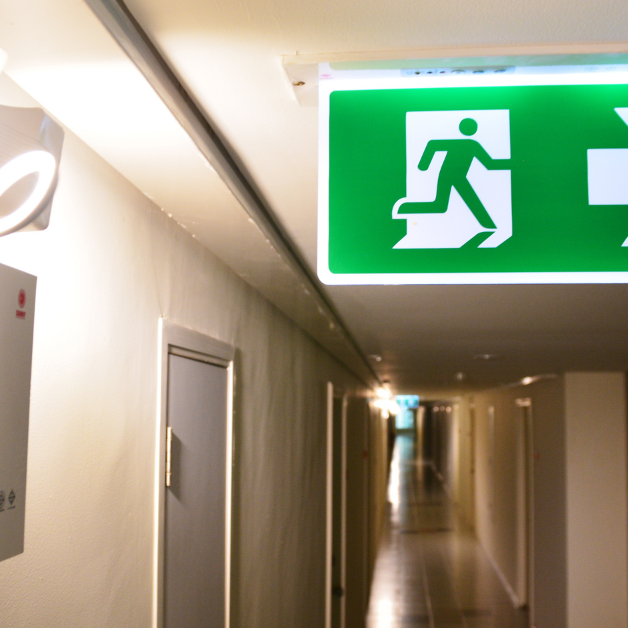
Emergency lights are provided to ensure safety and compliance during power failures, fires, or other emergencies. They illuminate escape routes, such as corridors and stairwells, making it easier for occupants to evacuate buildings safely and efficiently. Emergency lights reduce the risk of panic by providing clear visibility to fire exit signs and critical safety points, such as call points to activate the fire alarms and fire extinguishers. They are a legal requirement under regulations like BS 5266-1, ensuring that commercial and residential premises meet safety standards. Properly installing an emergency lights system leads to prompt evacuation and helps emergency services carry out rescue operations effectively.
Where are Emergency Lights Installed?
- Escape Routes: Corridors, stairwells, and exit paths.
- Fire Safety Points: Near fire alarms and extinguishers.
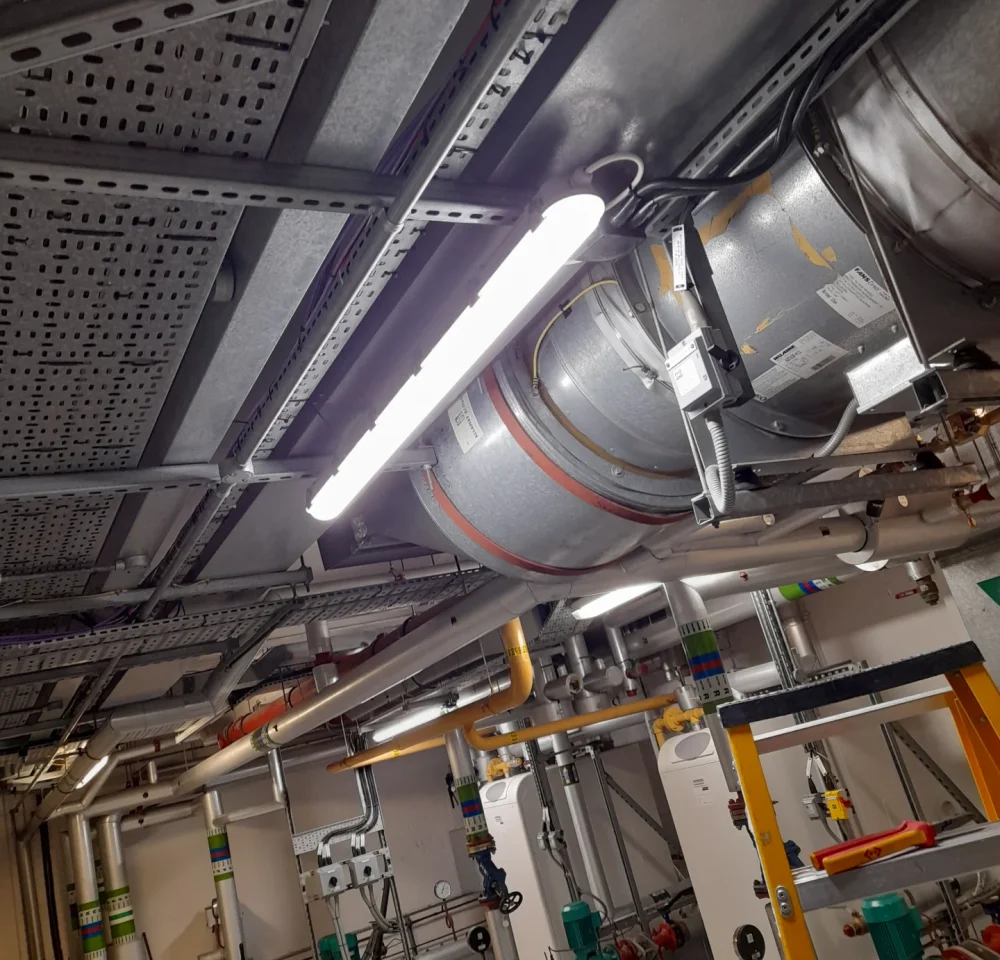
- High-Risk Areas: Boiler rooms, plant rooms, and workshops.
- Open Spaces: Receptions and assembly areas.
- Floor Level: Critical for visibility during evacuations.
Common Issues Found During Emergency Lighting Testing
Testing of emergency lights to ensure they comply with regulations is crucial. In our practice, we test many sites daily, and the most common problem is battery failure. If batteries fail, lights won’t operate when needed, so regular emergency lighting testing must be conducted to ensure batteries function correctly.
Another common issue is obstructed fire exit signs and evacuation routes. Keeping routes and signs unobstructed leads to safer and faster evacuations.
More complex issues are poor lighting installations and incorrect placement, which require a professional lighting engineer to deal with. The engineer will conduct a risk assessment that will identify these gaps and ensure proper lighting coverage.
Due to the older infrastructure in London, many buildings still have an ageing emergency lighting system, which was installed decades ago and needs to comply with the regulations. To address this, upgrading these systems is essential to ensure reliability, energy efficiency, and full compliance with current fire safety regulations.
Benefits of Professional Emergency Lighting Services
- Regular Testing: Ensures systems comply with legal requirements.
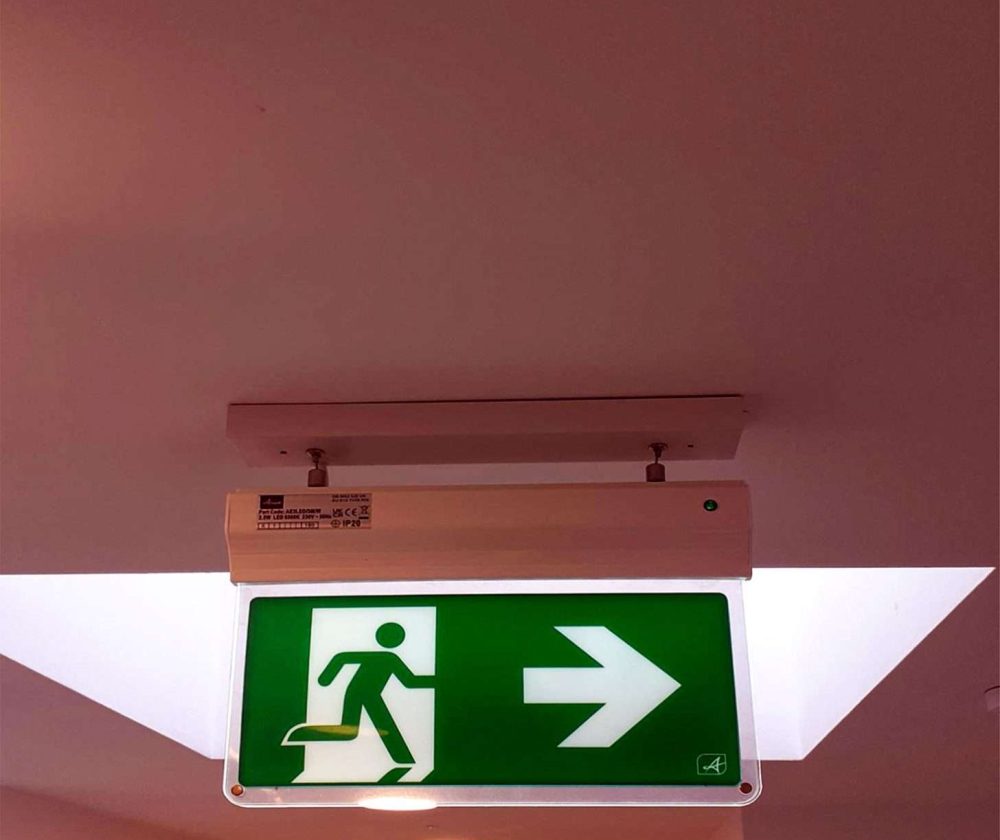
- Upgrades: Modern LED emergency lights offer better illumination and energy savings.
- Risk Assessment: Identify weak points in your lighting coverage.
- Compliance Support: Meets regulations like BS 5266-1.
Emergency Lighting Regulations and Standards in the UK
Emergency lighting regulations and standards in the UK are critical to ensuring safety and compliance in commercial and public buildings. Governed primarily by the BS 5266-1:2016 code of practice and enforced under the Regulatory Reform (Fire Safety) Order 2005, these regulations mandate that emergency lighting systems must provide clear illumination and guidance during power failures or emergencies.
Importance of Regular Testing and Maintenance
As we covered why emergency lights are provided, they will only do so if they are tested and maintained regularly. Polyteck’s engineers will conduct testing and repair of the emergency lighting system following a rigorous testing schedule in accordance with BS 5266 Part 1: 2016. The cost of not replacing batteries or a faulty light can be human life. This is why it is strongly recommended that a professional conduct the testing. In the US, annually, approx. 1000 lives are saved because of a functional system. To ensure your system is in good working order, has fully charged batteries and functioning lights, and complies with the regulations, contact us for your scheduled maintenance plan.